
Let’s be blunt about a reality the mining industry has dodged for years: traditional supervisor training is failing. Not marginally. It is failing in a way that puts lives at risk every single shift.
When a coal mine supervisor finishes a three-day classroom course and passes a written test, everyone involved pretends meaningful learning occurred. They go back to the site, and within weeks, critical emergency ventilation or roof-bolting protocols fade into a haze of half-remembered PowerPoint slides. Virtu confronted this head-on when building their VR-based supervisor training. The status quo isn’t just outdated; it’s a liability.
The Forgetting Curve Hits Different Underground
In a corporate office, forgetting a training module is a minor annoyance. In a coal mine, it’s a death sentence. The underground environment is inherently hostile—methane pockets, coal dust explosibility, and shifting roof stability offer a zero margin for error.
A supervisor who has genuinely internalized hazard recognition will notice the tiny shifts: condensation patterns on tunnel walls, air pressure fluctuations, or a gear sound that isn’t quite right. A supervisor who just memorized a textbook will miss those triggers when they matter most. The difference isn’t intelligence or years on the job—it’s the method of exposure.
Building Instinct Through High-Stakes Exposure
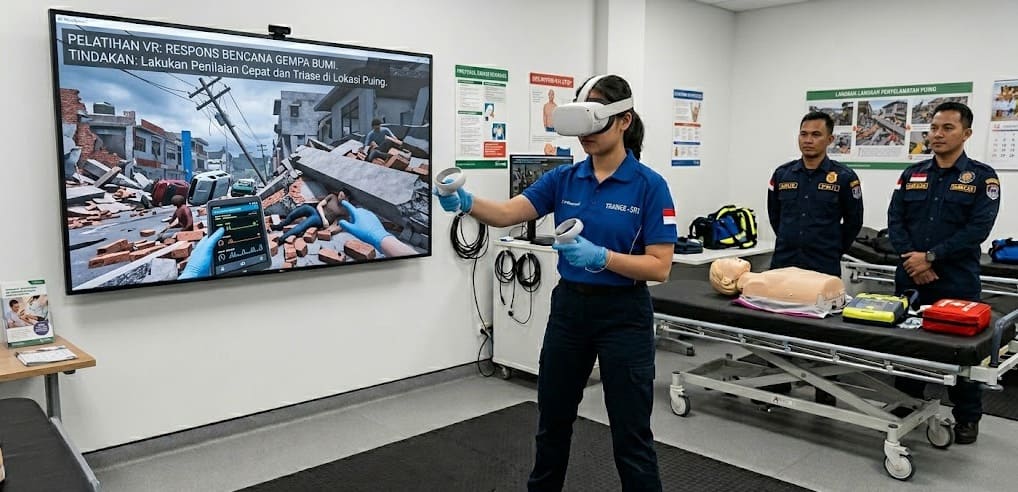
Virtu’s VR mining program does something no classroom can: it builds instinct. By placing supervisors inside realistic environments where hazards develop organically, the training creates neural pathways that fire automatically. After surviving a simulated roof collapse three times in VR, the response to early warning signs becomes a reflex, not a cognitive struggle.
This isn’t theory; it’s applied learning science. The 1,000 sessions completed across seven Indonesian centers in the first quarter represent a massive logistical win, but more importantly, they represent 1,000 supervisors with sharper, data-backed instincts.
The Geographic Consistency Problem
Standardization is a massive hurdle in a country like Indonesia. Ensuring a supervisor in Kalimantan gets the same instruction quality as one in Sumatra has always been a headache. Instructor quality varies. Facilities differ. Local training cultures introduce “drift.”
Virtual reality kills these variables. Every supervisor encounters identical scenarios and is measured against the same benchmarks. The Samarinda facility delivers the exact same experience as Palembang. For an industry where consistency equals survival, this is transformative. It allows a national standard of safety to exist outside of a textbook.
Beyond Onboarding: The Shift to Industry Standard
The mining sector is traditionally slow to change. Managers need proof, not slick decks. Virtu is building that proof session by session. Every supervisor returning to their site with demonstrably better skills is a walking case study.
What started as an innovative alternative is now positioning itself as essential infrastructure. As regulatory pressure from the Ministry of Energy and Mineral Resources (ESDM) increases, companies sticking to “passive” training risk more than just accidents—they risk their operating licenses.
Conclusion: Transforming Knowledge into Action
The trajectory is clear: VR is becoming the standard for mining supervisor training in Indonesia. The industry has a choice: adopt the “Zero Risk” infrastructure now or keep clinging to PowerPoint until the next preventable incident occurs. In the coal industry, the only thing more expensive than a 3D simulator is a disaster.